As The Official Animal Rights March is this Saturday, I wanted to show you why activism is so important and why coming to the march is one of the least things you can do. Please read my interview with Ricardo Viana and get inspired to make history! Do I see you there?!
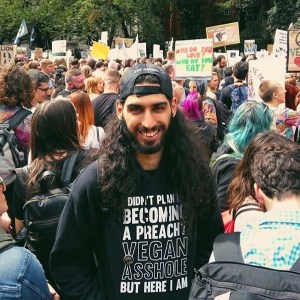 When I was visiting the Vegan Festival in Southampton, I met Ricardo Viana. Or actually, we didn’t really meet, I looked him up when I was back home. I did this, because I saw him speaking about veganism. Even though I missed almost all of the speech, I wanted to know more about him and his reason to become a vegan activist. He happily agreed on doing a little interview and so I found myself driving back to Southampton the following Friday. It was so easy to interview him, because he instantly knew his answer to every question. I wanted to share this with you, to make you understand the importance of speaking up.
Ricardo was born in Santo Tirso, Portugal, in 1994, but he came to the UK in 2017. He now is a vegan activist, mostly in Southampton. He does a lot for the Anonymous for the Voiceless. Here is why and how he became vegan and decided to fight for animal rights:
 How did you come into contact with veganism?
After 6 months of being a vegetarian, I came across a video on Facebook. The video was called ‘Why Vegetarians Should Go Vegan‘, by ‘The Vegan Activist’. Within minutes I realised that vegan values were the same as my personal values. Being vegan made so much sense, because it meant that I’d be true to myself. So I instantly became vegan.
What is your main reason to be vegan?
I went vegan, first of all, for the animals. Later I learned that it is also better for the environment, for my health, that you save water and that it’s better for wildlife etc. There are so many pros and no cons at all. I said to myself that being vegan is the best thing I could do.
What means veganism to you?
To be the best version of ourselves, in the best way possible! For ourselves, the animals and the planet. To not inflict any harm, because if we can choose not to harm, why would we? Veganism is showing compassion and kindness to every living thing that exist.
What is the hardest part about being vegan?
The negative comments I receive. Especially from family and friends. It’s hard to hear it from them, because it always makes me question ‘Why is this even a question?’ and ‘Why is being vegan weird in their eyes?’. You want the people you love most to be vegan too or to at least understand veganism.
 Do you miss anything that isn’t vegan?
Back in Portugal, there is a sandwich called Francesinha (Little French). It originally comes from Porto and it’s the best sandwich in the world. It’s made with different layers of bread and fillings; bread, different kinds of meat, bread, eggs, bread again and then melted cheese. It’s surrounded by fries and there is also a special Francesinha sauce. As you can see, it’s not vegan at all, but luckily, a lot of restaurants offer a vegan version now. It’s made with mock meat mostly or with mushrooms or anything really. There are different versions nowadays. It really tastes so similar to the original one and I always eat it whenever I’m back in Portugal.
When did you decide to become an activist?
The idea came in November 2017, after watching videos from Earthling Ed. Then one day I was walking on the street and there was an ‘Anonymous of the Voiceless’ demonstration going on. A girl came to talk to me, trying to talk to me about veganism. I told her I was vegan already, but that I would like to become a part of activism as well. She directed me and in January I got the chance to do my first thing.
 What was your first thing as an activist?
I did a ‘Cube of Truth’ with Earthling Ed, in Portsmouth. It was amazing! I talked to Ed and I told him he inspired me to become a vegan activist. It was a really nice experience. At first I started in the cube, but later on I swapped with somebody, so I could talk to the people too. Before actually talking to people by myself, I shadowed with Ed. Then the very first time I talked to someone by myself it was quite hard, because the man I talked to was very defensive. Of course I didn’t give up and luckily the conversations I had later on, went really well.
How important is activism?
In my opinion activism is very important! Not only vegan activism, but every kind of activism. When you believe in something, you should fight for it. So it doesn’t matter if it’s for animal rights, woman rights.. anything really. If you think something needs more attention, then you should make an effort.
If we share the vegan word, if we plant more seeds and change people’s mind, we have supply and demand. Supermarkets and restaurants will have to change, because there is a demand. If we can change the supply and demand, we can change everything and that is how the world becomes a vegan world. It’s the least that we can do for the animals, the planet and ourselves!
 How do you deal with negative people?
What we have to remember in activism (and not only in activism), is that if we transmit a negative energy back to the people who are rude or negative, we are not only giving them something that they will use against you, but we are also not showing the whole point of veganism. Veganism stands for compassion and kindness to everyone. I always suggest that you cut evil when you receive some. I take the negative comment and then answer it in the most positive way that I can, so the public can see that I’m not against them. I don’t see them as the enemy, I just want to help. A lot of the people have a very good response to that.
Do you have specific goals?
The ultimate goal is obviously to make the world vegan. Something I would like to see short-term, is more vegan restaurants in Southampton. At the moment there is only one in the centre.
What is an easy, but effective way to spread the message, that everybody can do?
Every little thing you share about veganism, is already doing activism. Like simply sharing vegan videos, pictures and mentioning veganism in conversations. Talk about veganism with other people. This all is more like passive activism, but it is always helpful. Always do whatever you can!
Who and or what is your biggest inspiration?
My biggest inspiration for sure, is Earthling Ed! I look at him with so much similarity. If I have to recommend videos to someone, I recommend his videos. He is really on the right track. I look at him as a mentor. He does what I want to do.
 Is there anything you want to add to this?
To those who are not vegan (yet), I would like to say: please look into veganism. If you have doubts about veganism for health, then watch ‘What The Health’. If you have doubts regarding the environment, watch ‘Cowspiracy’. If you never thought about veganism at all, then do some research for yourself and make your own conclusion.
To those who are vegan already I would like to say: If you want to see a vegan world, see more vegan options and if you want a less pain inflicted world (it doesn’t matter for what reason you’re vegan), then fight for your lifestyle. Think about vegan activism, do it, because it’s the least we can do!
I hope that this inspired you to look into veganism more and/or to speak up about veganism! If you can and want to do more into the world of activism, please look into it as well. Maybe there is already something being organised close to where you live or maybe you can set up something yourself. Make your voice heard for the ones that can’t speak for themselves!
I want to thank Ricardo for doing this interview with me and for being so inspiring and brave. You are somebody I admire a lot. You are making a change. Also, you are one of the nicest persons I ever met. Thank you so much for answering the questions with so much love, compassion and enthusiasm. Your heart is definitely in the right place! You are changing the world and I hope you’ll witness the day that the world is a vegan world.
Did this interview inspire you and would you like more information on how to get involved? Do you have questions about going vegan or anything else.. please contact me! I would also love to see your activism pictures and read your stories about how you are making this world a better place. You can show me by tagging me on Instargam or by using #planetmanel. Thank you for reading, X.
 What if we could understand animals (better)? For example, what if we knew how they think, what they are capable of and how they survive and evolved in this world? There are many studies when it comes to understanding animals and ‘their language’. Peter Wohlleben was kind enough to translate this into a book: ‘The Inner Life Of Animals – Surprising Observations of a Hidden World’. He runs an environmentally friendly woodland in Germany after working for the forest commission for 20 years. Peter has a lot of animals himself, like dogs, horses and goats. Because he is out in the open a lot, mainly forest land, he is also surrounded by a lot of wild animals. He speaks a lot from his own experience, but then reflects on the behaviour found in the studies he mentions. This way it’s easy to understand and imagine.
 Though Peter isn’t vegan himself, he almost writes like he is one. For example, he writes: “When people reject acknowledging too much in the way of emotions in animals, I have the vague feeling that there’s a bit of fear that human beings could lose their special status. Even worse, it would become much more difficult to exploit animals. Every meal eaten or leather jacket worn would trigger moral considerations that would spoil their enjoyment.”. Personally I find it a little strange that he understands animals so well and he can see it this clear, but then he can still exploit them himself. This is actually the only thing I think is such a shame, but other than that, I think this is an amazing book. Especially for people who are vegan for the animals or want to understand animals better. It’s fascinating how the animal world works. Some things will sound familiar to you, but others are so surprising and you can’t help but feeling compassionate and understanding even towards things you wouldn’t think you would.
 Something I really like is that the chapters in the book are very short (mostly only a few pages long). This makes it very easy to read. All the subjects (different emotions, feelings etc.) are divided in different chapters. This makes it an easy read and a nice book to just pick up once in a while, instead of reading it from cover to cover at once.
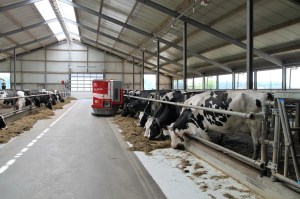 I want to tell you about the 3 most important things when it comes to dairy: Morality, Health and Environment. For me personally, the moral side is most important. Though you might find the health facts really interesting or you care more about the environment. It doesn’t really matter, because I think all 3 of them are very important. If you don’t believe me (and you shouldn’t, because there is so much false information on the internet), please do your own research. Let this article be a stepping stone to more knowledge about what it is really like. I always encourage people to think for themselves and to do their own research. Don’t instantly believe what you hear and what you read. You are the only one who can make a decision for yourself. Believing the dairy industry by what they say about needing milk for strong bones etc. is the whole problem to begin with. These are lies to make you buy dairy, so they can earn money, your money! So please think for yourself and decide if you still want to support the dairy industry after knowing this all.
 THE MORAL SIDE
 This is why the farmer takes the baby calf away from his/her mum and feeds it a milk substitute. If you are a mother yourself, imagine your baby taken away from you within hours (up to 72 hours) after birth? Because this is the time a baby calf gets to spend with his/her mother. The mother licks her baby clean, she cares for her baby, feeds her baby, bonds with her baby and then her baby is taken away from her. They call for their baby and the baby cries out for his/her mother, but there is nothing they can do. The mother goes back into the herd and they all get milked twice a day by machines.
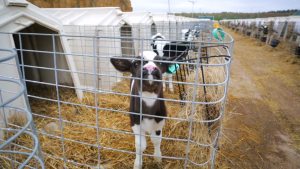 Then what happens to the baby calf? This depends. If the baby is a female she will end up living the same life as her mum. She is impregnated every year and every year a baby is taken away from her and the same will happen over and over again. When the cow is about 5-7 years old they will start to give less milk, what means they won’t be profitable enough. By this time they’ve given birth to 3-5 babies. Because they aren’t profitable anymore for milk they go to slaughter. Their tired bodies will be sold for meat. If the baby calf is a male there are 2 options: instant death or their bodies will be sold and called: veal. Male calves are not going to produce milk and so they are useless for the dairy industry. This is why a lot of male calves get killed right after
 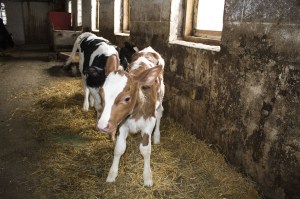 birth. They’ve spent 283 days growing in their mother’s womb and as soon as they come out their life is over. Veal is meat from a baby cow. They can be as young as 4 weeks old and as ‘old’ as 26 weeks old. There are different kinds of veal for different kinds of meat textures/colours. Some get fed only milk to make their meat pinkish and some are weened quickly to make their meat look more red. There are even calves that are fed a diet very low in iron so they get anaemic, just so their meat is more pink.
 HEALTHWISE
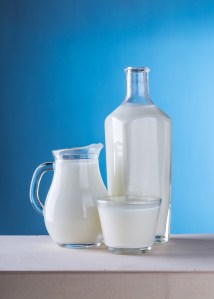
 Then there are hormones, antibiotics, blood and puss. For example, to make a baby calf grow into a big adult cow there are hormones in milk, just like there were hormones in your mother’s milk. All these hormones come into your body too. Dairy cows also get antibiotics, this is to prevent them from getting ill. A lot of dairy cows are kept inside all year around or only get to go outside for a few months a year. That makes it easy for diseases to spread. Antibiotics are the solution and even though most cows are not allowed to be milked for a short period of time after getting antibiotics, there is always some left behind and that all ends up in the milk they produce. Because of the milking machines and the massive amount of milk that is taken from the cows every day, their udders are often infected, what means that not only is there milk going into the milking machine, but also blood and puss. This isn’t an exception, but there is actually a legal amount of puss and blood cells in every carton of milk. Just gross if you ask me.
 So why do doctors and health experts recommend dairy for strong bones and an overall healthy lifestyle? Because that is what they’re taught. Doctors that recommend dairy aren’t evil doctors, but they just don’t know any better, just like a lot of people. In their study doctors only get 1 hour of nutrition a week and often it’s very dated. You probably wonder why this is dated and why they aren’t taught the right information anyway?! Because, and this might be very shocking to you, this is how the government makes money. The medical industry is one of the largest there is and there is a lot of money going around. If people will live healthier lifestyles they won’t get ill as much, they won’t need as much medicine and so the medical industry won’t make as much money. Yes, this is how it works. I know part of you maybe doesn’t want to believe this, but do your research and also.. just think!
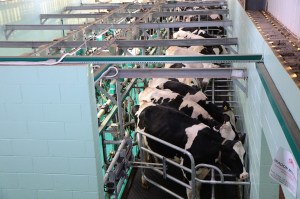 Why is milk bad for the environment? Because of alllll the dairy cows. There are over 264 million dairy cows in the world. That is a lot of animals and they’re not just any animal, they’re cows. Big and heavy animals that eat a lot, drink a lot and poop and urinate a lot. Only 1 dairy cow produces about 50 kg’s of poo and urine every day. That is 264.000.000 x 50 KG every day.. do the maths. All this produces a lot of CO2 and it all goes into the earth. It goes into the ground, into the water ad right into the oceans, polluting our world. The world where we and so many other animals live on. This is the world where our children are growing up, where their children will grow up.. think about the damage we are doing to these amazing animals, our own health and our world!
 ALTERNATIVES (where do you get your protein/calcium?)
 Quite a while ago I discovered the amazing artist Maria Tiqwah on Facebook. I asked her if she’d like to be on my blog and though it has been a while since the first time we spoke, she still agreed to it. Lucky me and lucky you, because she makes amazing things. I think she is super talented and her work should be out there more! Maria was born in Boskoop (Netherlands), in October 1982. Already since a very young age she is fascinated by animals. Her first words (yes, before ‘mummy’ and ‘daddy’) were ‘cat’ and ‘fish’. Because her love for animals, she always drew animals. That is also where her inspiration is coming from. She says: ‘Animals move me, amaze me and fascinate me. They make me smile and that smile I want to pass on via my paintings’.
 In August 2011, Maria watched a horrible video about the bio industry. She decided she didn’t want to contribute to this cruel industry any longer and she gave the sausage, she just got that morning, to the dog of her employer. At first she thought that veganism was a little extreme, but when she did educate herself and found out what was behind dairy, eggs and honey, she became vegan. She only uses vegan materials to make her paintings. When she became vegan she checked everything and luckily it turned out everything she was using was vegan already. She only uses 1 little brush for everything. She doesn’t like to use 20 different brushes and 100
  different colours. She rather shapes her brush in different shapes and mixes colours herself. For her paintings she uses a combination of: soft pastel, water colours (aquarelle) and a white gel pen on paper. She likes soft pastel as she can work faster and it gives nice bright colours. ‘The water colours are perfect for sharp lines and details’ she says and she uses the gel pen for the white bits in a painting. For the aquarelle paper she uses, she always has to make sure she gets the right one as some paper is made with gelatine. She used to use oil based paint and then she would sometimes work on a painting for 100 hours, within 1 year. With he technique she is using now, she can finish a painting in about 20 hours. She makes about 10 painting a year now.
 With her paintings she wants to show people the love, beauty and individuality of animals. This way she hopes there will be more respect for animals. This is why she also used a few of her paintings to create organic, ‘
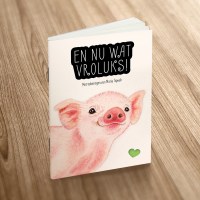
 Maria is quite a busy woman, because making beautiful paintings isn’t the only thing she does. She also runs her own green advertisement business. Some clients are: ‘Partij voor de Dieren’ (Party for the Animals – a political party in the Netherlands) and ‘Dier & Recht’ (Animal & Right – a organisation for animals). Last year she also published a little book with her paintings, called ‘
 volunteers, doing some graphic design work for Dutch organisations: ‘
 Nowadays Maria lives, with her husband Raqib, in Istanbul. They fell in love in 2005 and in 2009 they decided to move to the popular Turkish city. For them it’s the perfect place to live, as both cultural and geographical, it’s in the middle of the Netherlands and Kurdistan (where her husband is from). You can buy her work, though she doesn’t like to send her paintings via the mail. The easiest way would be to come to the VegFestNL in the Netherlands (28/29 of October 2017) or to plan a trip to Istanbul! You can always contact her via
 CATS PROTECTION
 DOGS TRUST
 RSPCA
RSPCA PDSA
PDSA Elise Klinkert was born in 1967 in the Netherlands. She now lives in the north of the Netherlands, with her husband and 2 children. As a child she actually never painted. She was good at drawing, but she never decided to do something with it. She has always been creative though and designed and made other things, like jumpers, cardigans, teddies, lamps and even a wedding dress. Now, since 20 years, she is a stylist for fashion and advertisement photography. For the last couple of years she’s also been active as a photographer herself. Only 3 years ago she started painting and she feels that this is her future. When she paints it feels like everything comes together and this is what she wants to do. She is completely autodidact when it comes to painting. In the back of her garden she created a little studio. It’s very quiet there and she can completely focus on her paintings, whilst looking at an old magnolia tree and the birds singing in the background.
 As a vegan I was curious why she chose to paint a lot of animals. But she actually doesn’t have a clear explanation for that. She loves animals and if something touches me she wants to translate that into a painting. ‘It’s that simple’ she says. For me this is a very clear answer of why she chooses animals automatically. Animals touch you, they’re so pure, honest and majestic. Nature and emotion are her biggest sources of inspiration. Most of the time it’s just that one moment, that glance or that right atmosphere she tries to translate through her paintings. She finds it very important in her work. She doesn’t make some sort of plan of what she should paint. She paints what she feels. This means that sometimes she started something, but then she doesn’t touch it for months. Then later on she will work on it again. It also means that some paintings will never be finished and end up in the hearth. ‘That’s part of it’ she says.
 She mainly works with acrylic paint, but sometimes also with oil paint (like the ‘White Goat’ here on the right.) She definitely prefers acrylic paint, as she has difficulty with the mediums you use with oil paint. She also likes to use acrylic paint better, because oil paint is bad for your health and for the environment. Depending on the painting and her mood, it can happen that she finishes a painting in a matter of days, but it also happens that it takes months and that she does other painting in the meantime. Elise also does commissions, depending on the clients wishes. If you’re interested in her work, I recommend taking a look at her beautiful
  New York
 It felt all very surreal to her and it was totally unexpected.So last November she flew to New York, with her paintings, to exhibit her work at the Equus Film Festival! ‘You understand, this was an amazing experience!’ she says. The painting you see on the left, used to hang on the wall at Rikus and I saw it many times. She couldn’t bring this specific painting, as right after the news that she was going to New York, it was sold instantly. The painting on the right is one of my personal favourites. In my opinion she totally deserved to win as I’m a big fan of her work. So without any doubt: congratulations Elise!
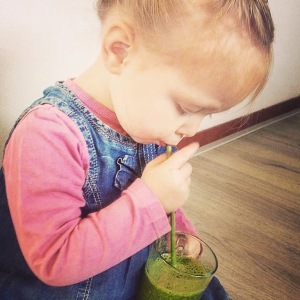
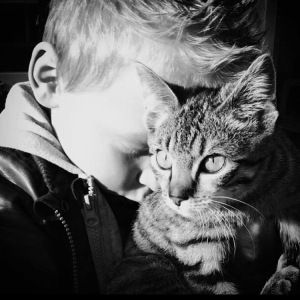 A child is pure and honest. How can a baby choose what to eat? And though 2 year olds can be really controlling about what they eat, in the end, they can only eat what you give them. You can get a lot of critic raising your child vegan. People say that you’re forcing your child to be vegan. I see it the other way around. Feeding your child animal products is forcing them to eat animals and you’re teaching them not to respect them. I do believe that if a child is able to choose, it would not choose to use, kill or eat an animal. Children are naturally very compassionate towards animals. Animals are friends in their eyes, not food, not shoes and not an ingredient in their bath bubbles. Only a child doesn’t know most of the times that it’s eating pork or wearing a woollen jumper. There comes a point though that they find out that the mince meat in their bolognese is made of a cow and that the fish next to their chips is a fish who swam in the ocean not long before. For some children that comes when they’re 4 years old and another realises it when turning 9. Though, at that point, people tell them ‘it’s ok’. You’re literally telling them that it’s alright to make a difference between animals. To not care about their feelings or maybe to act like those animals have no feelings. Isn’t that unfair?
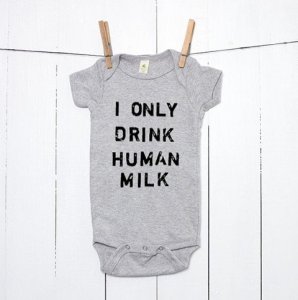 You are what you eat. Don’t get me wrong, I’m very much for breast-feeding, it’s totally vegan! Though, if the mum eats meat or drinks milk.. part of that is also going to the baby. Not only with breast-feeding, but already since the very beginning, starting in the womb. The body uses the food the mum eats to help the baby grow and to produce milk. This is the reason you can’t eat very spicy things for example, you risk the baby getting cramps. This is the very first thing what happens to a young innocent baby. Then after a few weeks or months a lot of mums have to stop breast-feeding for all sorts of reasons. So a lot of people will start giving their babies formula, based on cow’s milk. Milk what is made for a baby cow. From about 4 months, the weaning starts. First some fruit and veggies, but then also yogurt, milk, cheese, eggs and meat. This article is not about sugar and E-numbers, but with the weaning that also starts. A lot of children biscuits or cereals are full of crap.
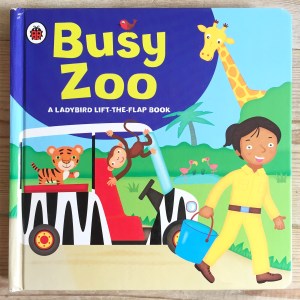
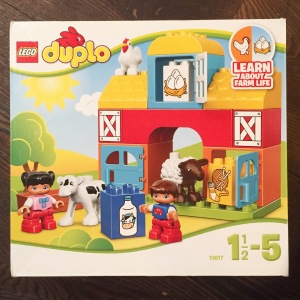 That is all about food, but what about toys, books and education? How many toys are out there of happy elephants in the circus? Or the smily hippo’s in the zoo? Children are taught that elephants belong in the zoo, not in Africa. Worst of all, they’re being taught that the elephants like to be in the circus. But one of the biggest things that annoys me I think, is the farm books and toys. Children are being taught that chickens are here to give us eggs, cows exist so they can give us their milk, sheep are here to give us wool etc. Then I’m not even talking about the hypocritical way of pretending that the animals are happy farm animals. Then I’m thinking, how will the world ever change, if children are being taught lies? A few weeks ago I was at a playgroup and we
  had story time. The children were all excited and sat down, so the lady could read the story. It was about animals. Lovely! A lot of animals were mentioned, cows, cats, ducks, dogs and also a turkey. A beautiful gracious black turkey. Instead of mentioning what wonderful animals they are, she said: ‘we probably all had them at Christmas’! Everybody was laughing and some people started nodding. It made me furious and I almost wanted to say something about it, but I know that it’s not the way. People will only think of me being extreme and I would get the opposite result. It was a hard moment though. Nobody was thinking about what we were teaching the children here. Probably because these people grew up the same way. Where and when do we break this circle?! It was a very sad moment and it really got to me. One of the reasons I decided to start writing an article about this subject.
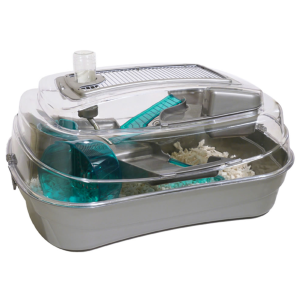 About pets. I’m very much for keeping pets, especially around children. There is no better way to teach children compassion and love for the beautiful animals in this world. Letting them close to them and care for them is great. You have to admit, that children love pets too. A lot of children get excited about seeing a dog or stroking a fluffy bunny rabbit. But shouldn’t we also teach them how to keep them? Most dogs and cats are fine, apart from being teased sometimes, without parents teaching the children how to approach them in a correct way. If the dog or cat bites or scratches, the animals gets blamed. Weird. A lot of parents like to get hamsters or fishes as a first pet. You get a cage, food and some other necessary supplies and the hamster can live there its whole life. Some cages are not bigger than an A3 paper. It’s like a prison. Also a lot of times they’re being kept alone. No social interaction with its own species what so ever. I don’t agree with this at all. I have to admit, I used to have a lot of hamster and bunny rabbits living like this when I was a child. It makes me sad thinking about it now, but at that time I didn’t now better, I didn’t think about it. Now I am and I
 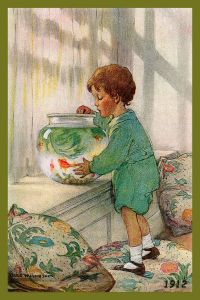 think it’s important to get it out there. Hamster like space, they like running around, exploring.. and not only in plastic tunnels. This is just as sad as a fish in a bowl or an aquarium. Fishes would normally have the ‘whole ocean’ to swim in and now they have a few litre of water. Just because we want to keep and own them. ‘My child love fishes, so I bought him a fish in a bowl’. Not thinking about, that if you really love fish, you wouldn’t do this to the fish. Same as fishing. Fathers taking their son on a fishing trip, sounds all very nice, being in the fresh air, near the water.. but it’s basically teaching them how to torture a fish. How can the world become a better world if we keep teaching the children to have selective compassion? You should not pull a cat’s tail, but it’s ok to catch a fish with a hook through its lip. You should not kick a dog, but it’s ok to take away a calf from its mum so we can drink the milk. You should not poke a bunny rabbits eyes, but it’s ok to kill a fly. Maybe a fly sounds extreme to you, but why can’t we teach them respect instead?
 In London a lot of little children are chasing the pigeons in the streets. ‘So much fun’! I never liked it and I never allowed the children I looked after. It’s not like they’re harming the pigeons, but I always told them to be nice to the pigeons and not to scare them. I always tell them to say hi and wish them a good day. Just a little compassion for the living beings we share this earth with. Why can’t we teach them to do that with all animals? A spider isn’t scary and a rat isn’t disgusting. They’re animals with feelings and emotions. They can feel pain and all they want is to live, just like us. I’m sure if we all educate ourselves, we’ll educate our children better. Teach them to only eat plants, to choose compassion and to show love and respect for everything that lives. We have a choice nowadays. Children are not only the future, it is their future. And so far children are being taught to destroy the world they grow up in.
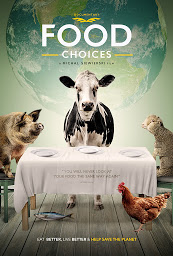 FOOD CHOICES
 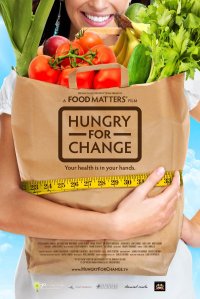 HUNGRY FOR CHANGE
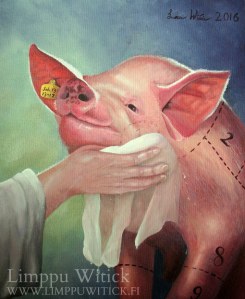 Via Facebook I came across ‘Limppu’, the artist name of Laura Witick. I saw this beautiful image of a pig she painted. (My eyes always seem to spy pigs..) The painting really got to me. It had my full attention from the first second I saw it. I absolutely love it! It gives me goosebumps, makes me feel incredibly happy and it makes me want to burst out in tears at the same time. I think it’s amazing and Laura is a beautiful person, as she is involved in different animal rights organisations, donates part of what she earns with her art to all sorts of different charities and she is vegan. I really wanted to interview her and write about her, so more people will get to know her and can enjoy and support her work.
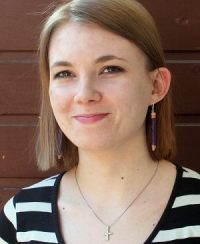 In March 1991, Laura Witick was born in Kokkola in Finland. It was right then when her father gave her the nickname ‘Limppu’, what literally means ‘loaf of bread’ in Finnish. Unfortunately he can’t remember how he came up with it anymore, but nowadays she still goes by that name. When her real name got mixed up because more people are called ‘Laura Witick’, she decided to use ‘Limppu’ as het artist name.
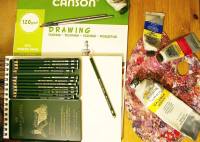 ‘Winsor&Newton’ (note: the colours ‘Ivory Black’ and ‘Payne’s Gray’ are not vegan) and canvases from ‘Daler-Rowney’ for her paintings. For her drawings she uses the pencils from ‘Faber-Castell’ and drawing paper from ‘Canson’. To see what other art supplies she uses, you can
 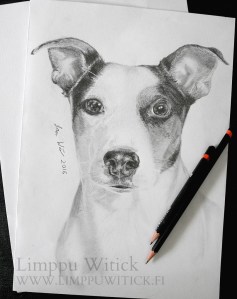 When Laura was 6 years old she started Kokkola Art School. It’s an art school for children and young people. You would think it was something she’d love, but the unexpected happened, she quit after a month. She only wanted to draw, paint and mould animals, but because that was not the only thing they did there, she thought it was boring. Though a year later she did attend the entrance exams again and she got in, again. She went to art school for 8 years, but when there was only 1 year left before graduation she quit again. This time because she was moving to Lapland. It didn’t really upset her, as she didn’t have any interest of continuing anyway. Since then she never applied for any art school again. She can be very short about it: ‘I really love art, but I don’t love studying it’. Nevertheless, she did graduate from ‘Upper Secondary School’, ‘Visual Arts’ oriented and she has completed a Fine Arts Diploma in there too (5/5). She has also did several art courses in the ‘Adult Education Centre’ of Joensuu.
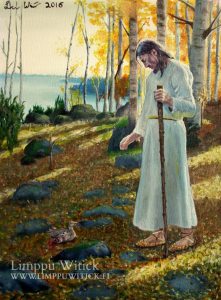 Laura is not just an artist who likes to paint animals, because she also has a Lutheran priest education and she’s a Master of Theology. She believes that God created animals for independent purposes and not so much for the nourishment of humans or for any consumer goods. She has based her views above all on the story of creation, where all beings are depicted as vegetarians. Laura tells me something else what I found very interesting. In her words: ‘Like the famous animal theologian Andrew Linzey deduces, the rule of humans cannot focus on killing or usage of any created being, because humans didn’t have permission to eat animals in paradise despite their rule over creation. The nature of domination is a protective rule. To act as the image of God means the ability of humans to intermediate the love of God’.
 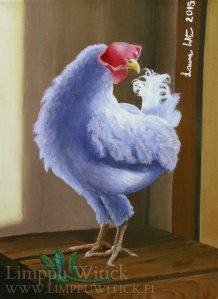 Laura gets her inspiration from every day life. Most of the time it’s when she is doing something very irrelevant to art, like grocery shopping or reading a book. Any time of the day a great idea can pop into her head and when that happens she feels the urge to paint it. At the moment Laura is creating her first art exhibition, called ‘Mercy!’. It’ll be about the relationship between God and animals in Christianity. She hopes that her art gets more people interested in animal rights. She wants to make the world a better place, for all of us. She’s aware of the fact that it mind sound idealistic and a bit naïve, but I think that people like Laura is what the world needs. Now more than ever.
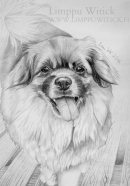 Laura is self-employed and she also does commissions for a living. If you are interested in her work you can go to her
 make you happy? I think we should focus on all the things what really makes us happy. In my opinion those things which are most close to you and they’re often the little things. When was the last time you felt really happy and you took a moment to think about it and be grateful?! I think it’s a good idea, after you finished reading this, to write down all the things you’re grateful for. You can make the list as long as you want. You can keep it short or you can explain why you are grateful for the things you wrote down. I think this is a very good exercise to make you realise what you have. It could even be helpful in a time you need some positivity, but you find it hard to come up with things because you feel so down. Just read all the things you wrote down and take a moment to be grateful. To help you understand what I mean, I will share a few of the things I’m grateful for:
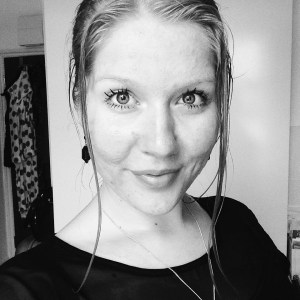 – My health. My body has it’s problems, but overall I’m healthy. Even though I got some health problems, I always try to focus on the things I can do. I’m grateful for being alive.
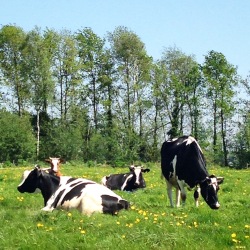 – My sensitivity. I must admit that this is both a blessing and a curse. Though I mostly like to see it as a blessing. I feel things very deeply, I sense things very quickly and my love is very strong. I would’t want to live in any other way and in a way it even makes me feel proud. It makes me a very passionate person, what can only be a good thing.
 – London. I love London. I love my flat and I’m so grateful that I live in this amazing city, where I feel so very much at home. Wherever I am in the world, I always feel euphoric whenever I’m back.
 This all doesn’t mean that you can never have a little complaining once in a while, because that can also feel as a relief sometimes. Just make sure that, wherever you go and whatever happens, you also keep seeing the great things around you. Or if you’re in a very bad situation, remember the good things. Think of all the things that make you happy. It could be a family holiday.. the inspiring feeling you had after watching this amazing movie.. the time you and your best friend had the best day ever.. that satisfying feeling you get when you wake up and you realise the love of your life is sleeping next to you.. or that time you climbed that mountain and enjoyed the silence when you made it to the top, feeling proud of yourself. Be grateful.. Being grateful opens your heart!
 Planet Manel